
Invoicing in Morocco costs more than the invoice is worth
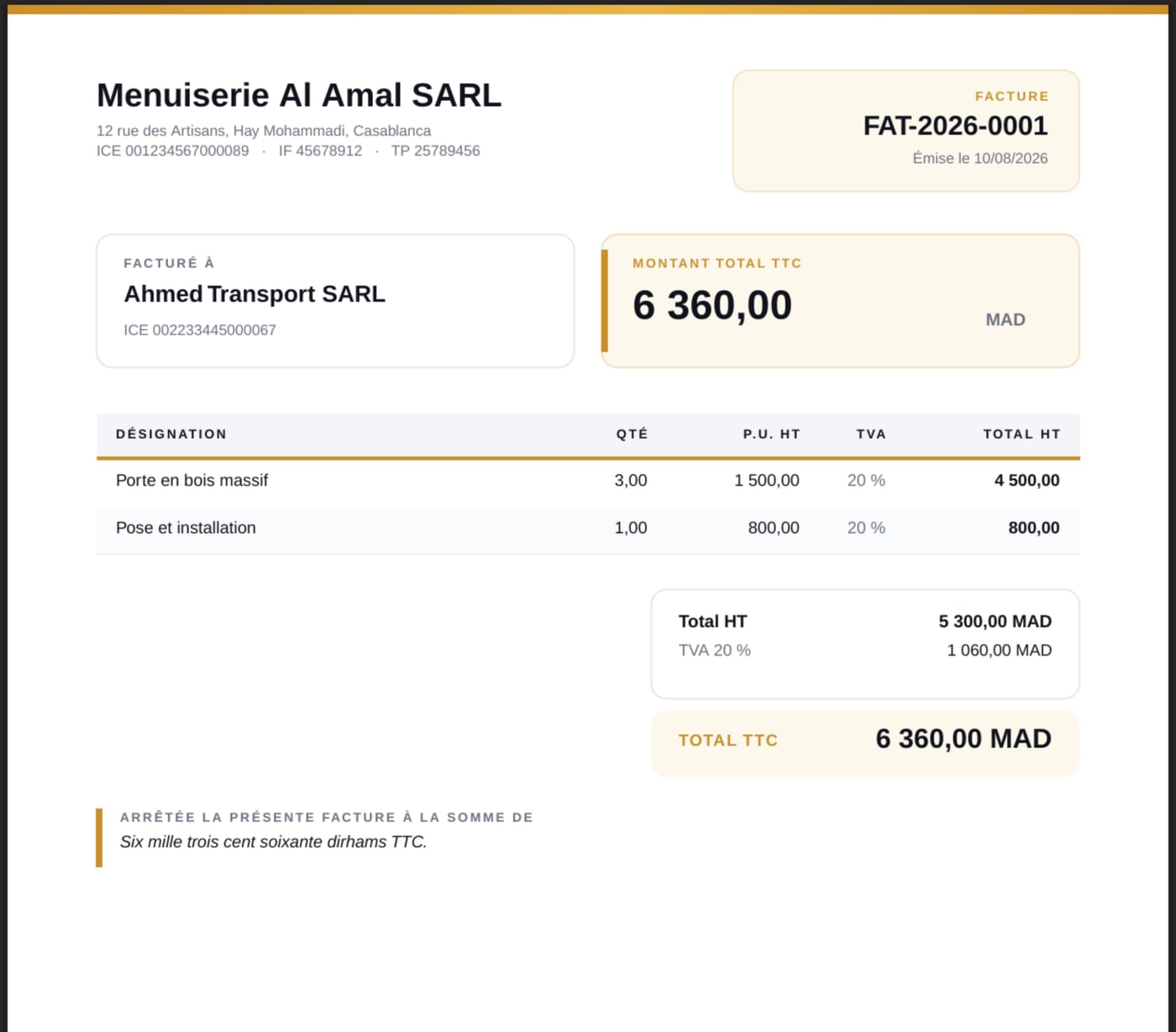
Moroccan micro-businesses invoice from carbon-copy books, or not at all. When they do buy software, they buy something designed for an accountant: a per-seat licence, a data-entry screen, a training session, and a salesperson who will never open it from a building site or a shop counter.
Article 145-IX of the General Tax Code established electronic invoicing on a clearance model, where the invoice passes through a government platform before it reaches the customer. The timetable for the smallest businesses still depends on a decree unpublished as of mid-2026: the deadline is coming, but it is not here. That is precisely the window in which a tool has to be useful for something other than compliance — otherwise nobody adopts it until the night before the law bites.
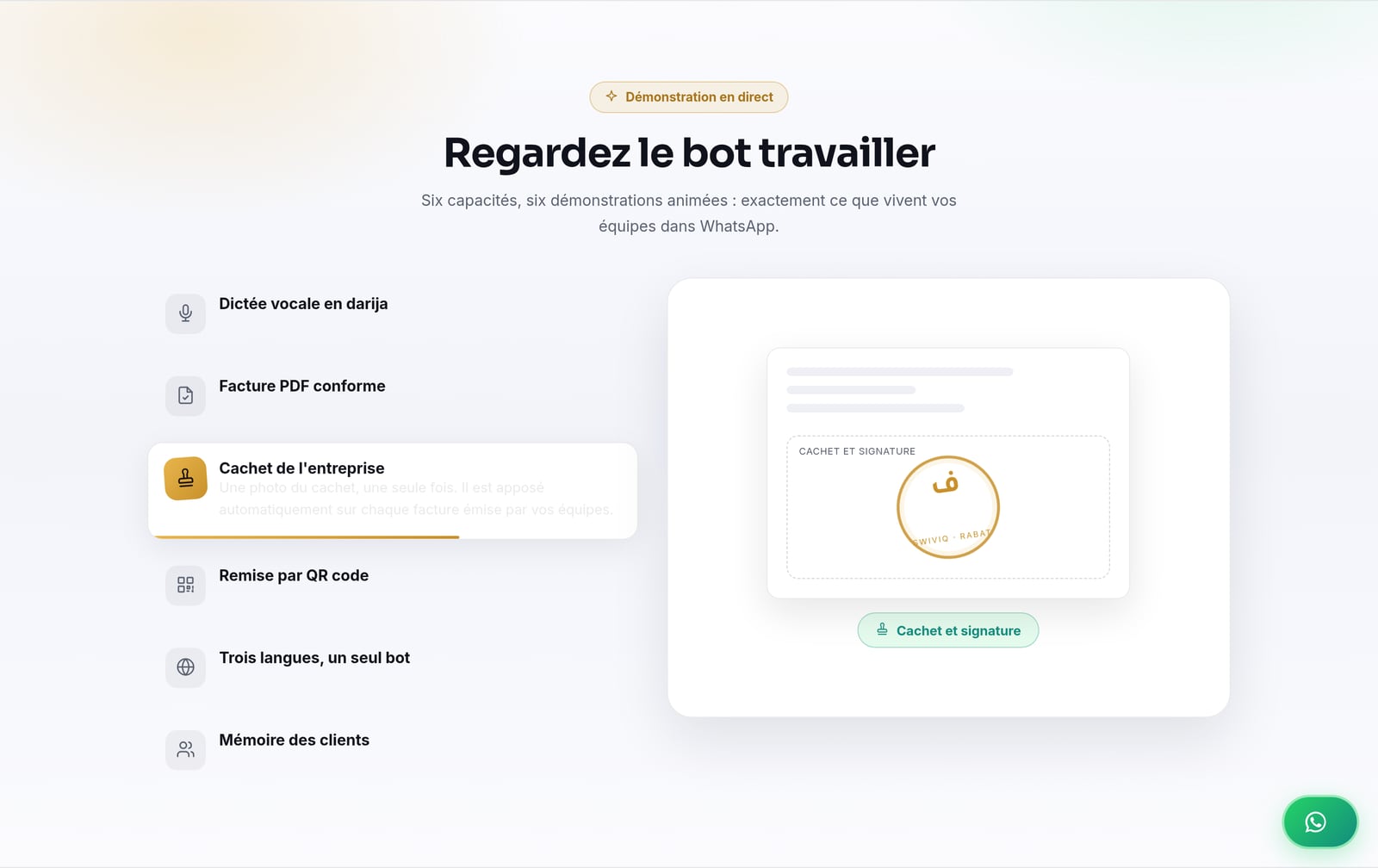
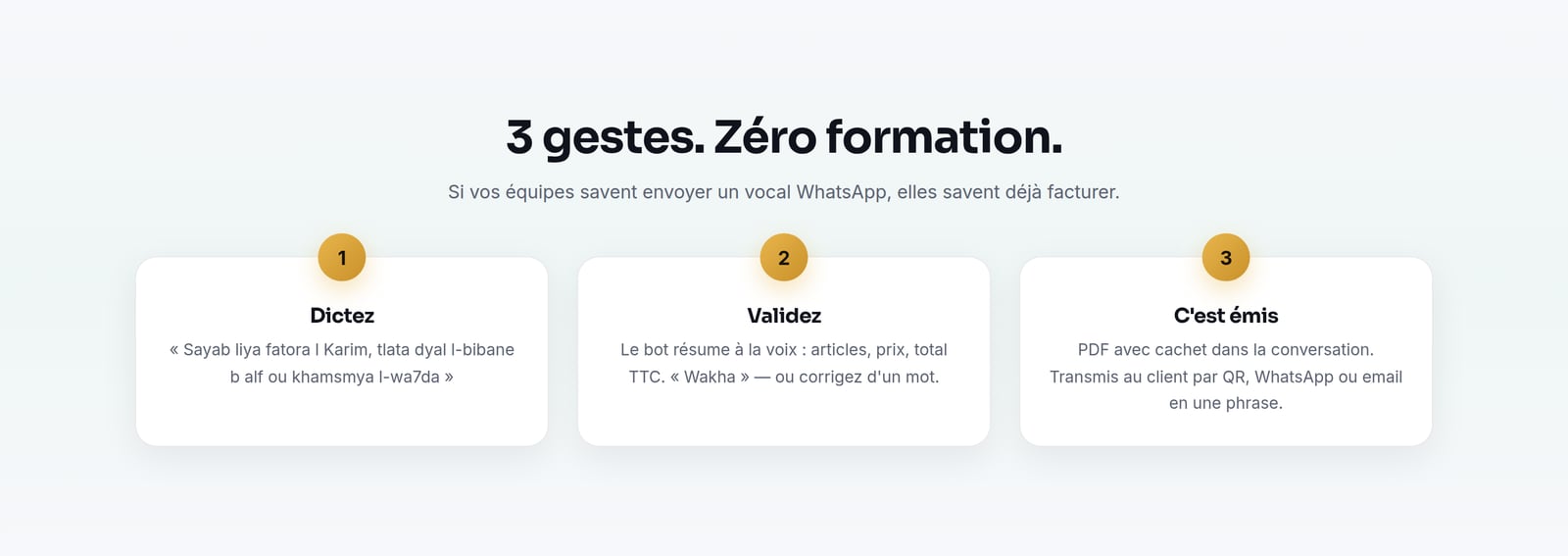
Fatora Bot attacks the problem through habit rather than through law: nothing to install, nothing to learn, and compliance arriving as a by-product of a gesture the team already performs fifty times a day — sending a WhatsApp voice note.
- Nothing to deploy: WhatsApp is already on every salesperson's phone
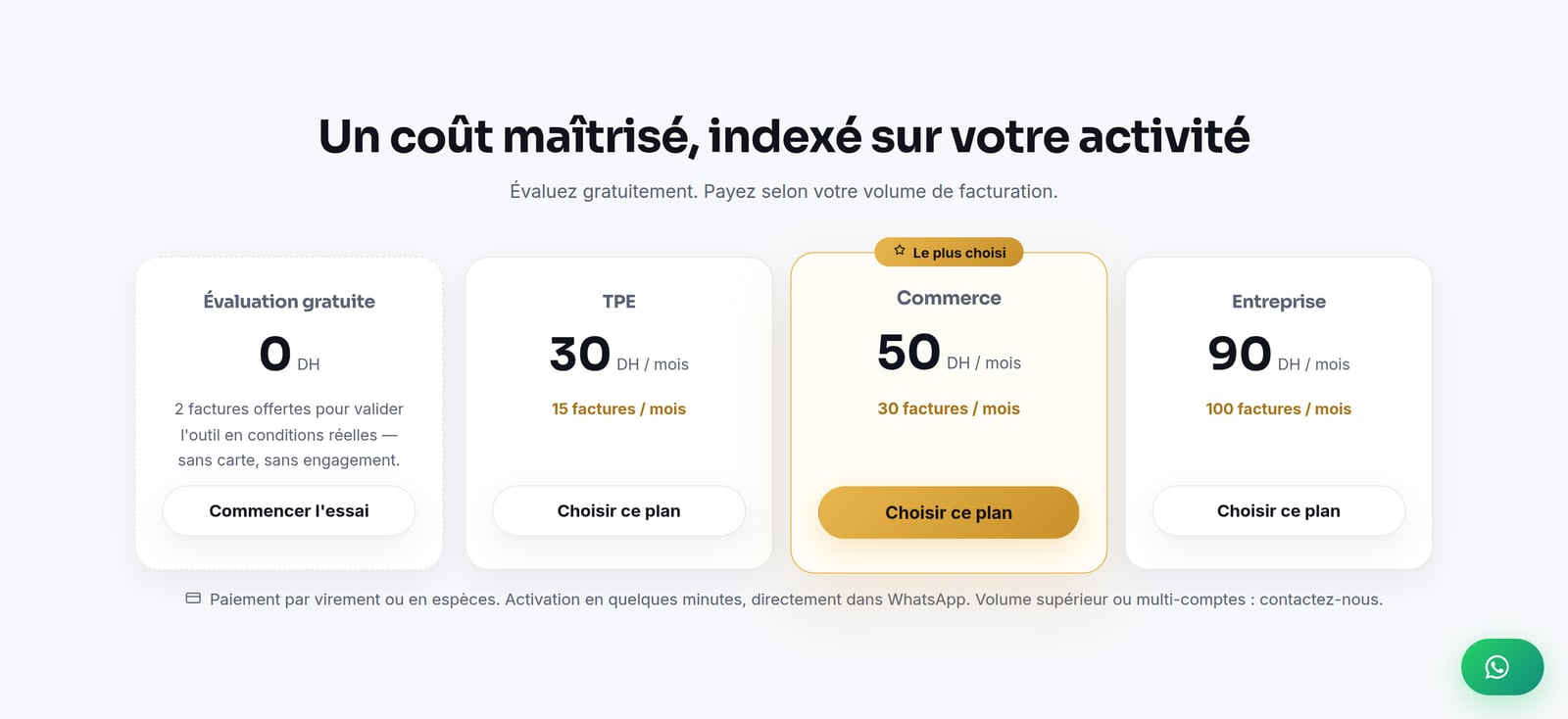
- No per-seat licence — price follows invoice count, not headcount
- No training: the interface is a conversation
- Tax compliance obtained without having to understand it
- A head start on the mandate rather than a scramble at the deadline